
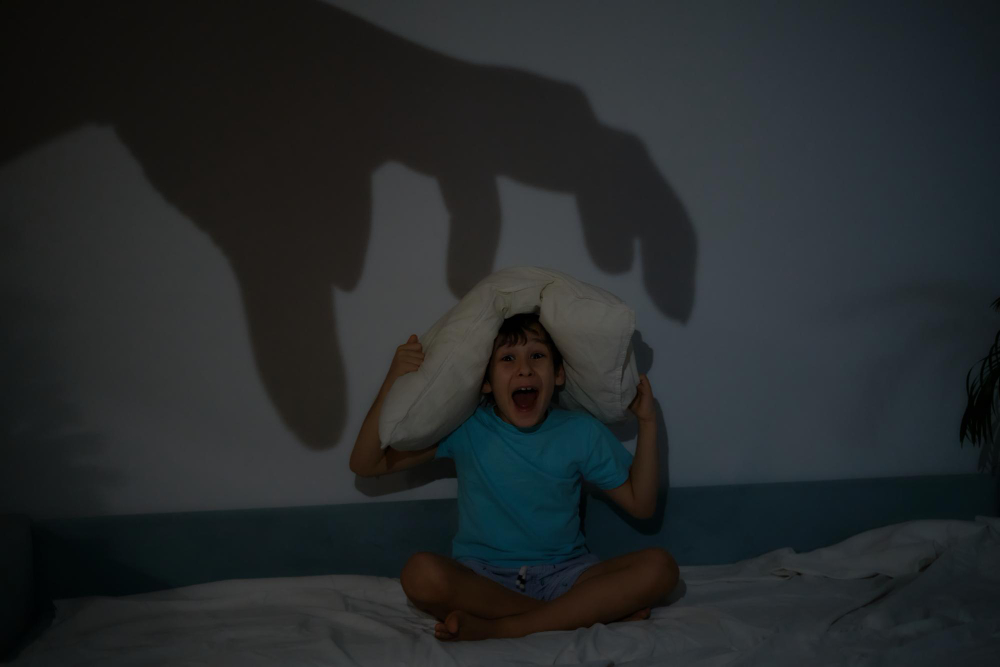
Night terrors and nightmares are both sleep problems seen in children. However, they are not the same. Night terrors often cause children to scream or move suddenly during sleep. Nightmares, on the other hand, are scary dreams that wake a child up. Understanding the difference between night terrors and nightmares in kids is important for parents. Both are types of child sleep disturbances and can be part of pediatric sleep disorders. Yet, they have different causes, symptoms, and solutions. This guide will help you spot the differences and know what to do.
What Are Night Terrors?
Night terrors are sudden episodes of fear during sleep. Usually, they happen in the first few hours after a child falls asleep. Children may sit up, scream, or look scared. Sometimes, they sweat or breathe fast. Most often, children do not remember the event the next morning. Night terrors are most common in children aged 3 to 8 years. Each episode can last from a few seconds to several minutes. However, some may last up to 30 minutes. Afterward, the child usually goes back to sleep quickly.
What Are Nightmares?
Nightmares are bad dreams that wake a child up. These dreams are often scary or upsetting. Children may remember the details and feel afraid to go back to sleep. Nightmares can happen at any age but are most common in children between 3 and 12 years old. Unlike night terrors, nightmares usually occur in the second half of the night. Children may need comfort after a nightmare and may talk about what scared them.
Key Differences Between Night Terrors and Nightmares
Causes and Risk Factors
Many things can lead to night terrors or nightmares in children. Some common causes and risk factors include:
Diagnosis and When to Seek Help
Parents can often tell the difference by watching their child’s behavior at night. If your child screams but does not wake up or remember the event, it may be a night terror. If your child wakes up scared and remembers a bad dream, it is likely a nightmare. However, if episodes happen often, last a long time, or cause daytime problems, it is best to consult a pediatrician. Sometimes, sleep studies or other tests may be needed to rule out other issues.
Treatment and Home Care Tips
Most children outgrow night terrors and nightmares. Still, there are ways parents can help:
Prevention and Healthy Sleep Habits
Good sleep habits can lower the risk of night terrors and nightmares. Here are some tips:
If your child experiences frequent night terrors or nightmares, consult a pediatric specialist at Dr. Suresh Kumar Panuganti’s Clinic for personalized guidance.