
What Are Ear Infections in Children?
Ear infections in children are very common. In fact, many kids will have at least one by age three. Most ear infections affect the middle ear, which is the space behind the eardrum. This area can fill with fluid and become infected by bacteria or viruses. Because children’s ear tubes are shorter and more narrow, they are more likely to get infections than adults. According to the CDC, ear infections are a leading reason for doctor visits in young children.
Common Symptoms
Children may not always say their ear hurts. However, there are signs you can watch for. Early treatment can help prevent problems. Look for these symptoms:
Sometimes, symptoms can be mild. But, if your child has a high fever or severe pain, seek care quickly.
Causes and Risk Factors
Ear infections in children often start after a cold or sore throat. Viruses or bacteria can travel from the nose or throat to the middle ear. As a result, fluid builds up and causes infection. Several factors can raise your child’s risk:
Because young children have smaller ear tubes, they are more likely to get blocked and infected.
How Ear Infections Are Diagnosed
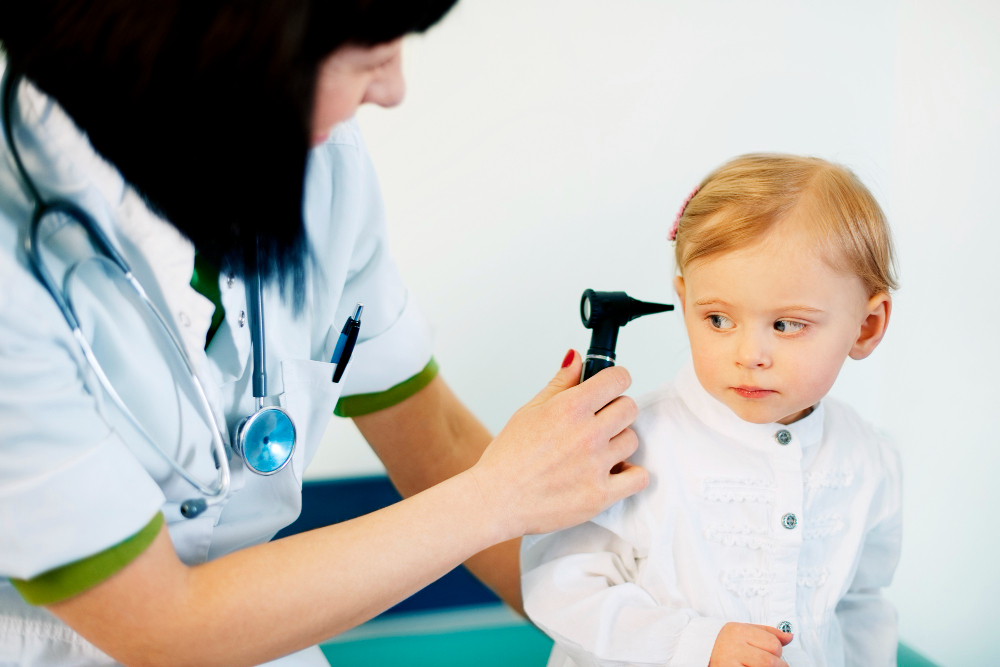
Doctors use a simple exam to check for ear infections in children. First, they look inside the ear with a tool called an otoscope. This helps them see if the eardrum is red, swollen, or has fluid behind it. Sometimes, they may use a special device to check for fluid movement. In rare cases, hearing tests or other exams may be needed. Most of the time, diagnosis is quick and painless.
Treatment Options
Treatment for pediatric ear infection depends on the cause and severity. Many mild ear infections get better on their own in a few days. However, doctors may suggest:
Not all ear infections need antibiotics. Overuse can lead to resistance. Always follow your doctor’s advice for pediatric ear infection treatment.
Home Care and Lifestyle Tips
While your child recovers, you can help them feel better at home. For example, try these tips:
Additionally, avoid giving aspirin to children, as it can be harmful.
Prevention Strategies
Preventing ear infections in kids is possible with some simple steps. Consider these strategies:
Because group care can spread germs, teach your child to cover their mouth and nose when sneezing or coughing.
When to See a Doctor
Sometimes, ear infections in children need prompt medical care. See a doctor if your child:
Early treatment can prevent complications.
For personalised advice, consult Dr. Suresh Kumar Panuganti if your child shows signs of an ear infection.