
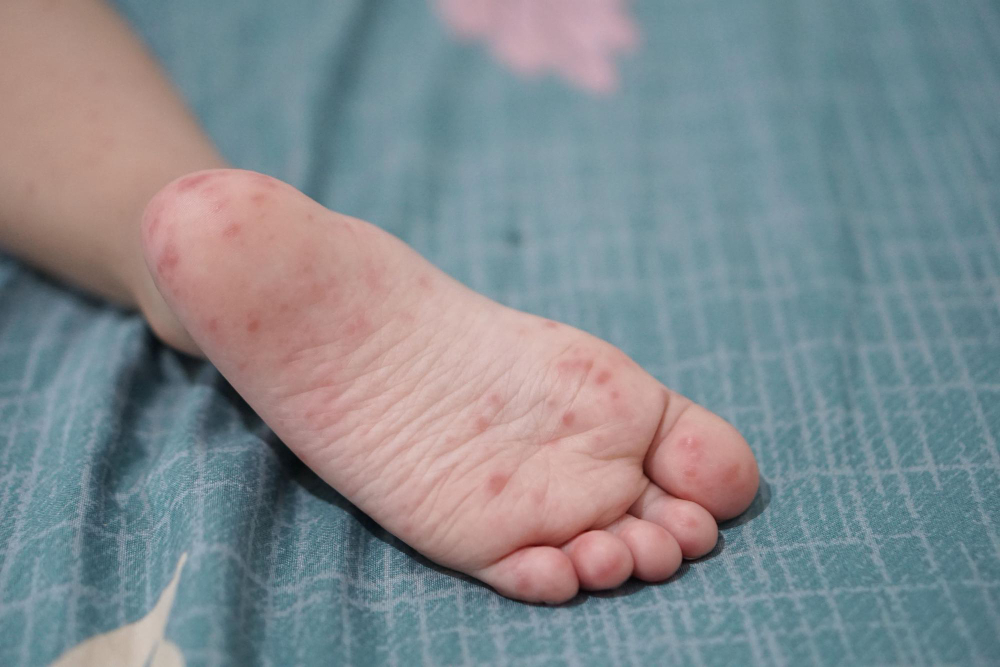
What is Hand, Foot, and Mouth Disease?
Hand, foot, and mouth disease is a common illness in children. It usually affects kids under five years old. However, older children and adults can get it too. The disease is caused by viruses, most often the coxsackievirus. Although it can look scary, it is usually mild. Outbreaks often happen in schools and daycare centers, especially during summer and fall.
Common Symptoms
Children with hand, foot, and mouth disease show several signs. Early symptoms can look like a cold. But soon, other signs appear. Watch for these symptoms:
Sometimes, children may drool more because mouth sores hurt. Not every child will have all symptoms. Still, if you see these signs, HFMD may be the cause.
Causes and How It Spreads
Hand, foot, and mouth disease is caused by several viruses. Most often, the coxsackievirus A16 is to blame. The disease spreads easily from person to person. For example, it can spread through:
Because of this, outbreaks often happen in places where children are close together. Good hygiene can help stop the spread.
Diagnosis
Doctors usually diagnose hand, foot, and mouth disease by looking at the symptoms. They may ask about recent contact with sick children. In most cases, no special tests are needed. However, if the illness is severe or unusual, the doctor might take a throat swab or stool sample. This helps rule out other diseases.
Treatment Options
There is no cure for hand, foot, and mouth disease. However, most children get better on their own in 7 to 10 days. Treatment focuses on easing symptoms. Doctors may suggest:
Antibiotics do not help because the illness is caused by a virus, not bacteria.
Home Care and Lifestyle Tips
At home, you can help your child feel better. For example, try these tips:
Because children may not want to eat, focus on keeping them hydrated. If your child refuses fluids or seems very weak, call your doctor.
Prevention Strategies
While it is hard to prevent every case, you can lower the risk. Try these prevention tips:
Because the virus can live on surfaces, regular cleaning is important. Good hygiene helps protect your family and others.
When to See a Doctor
Most cases of hand, foot, and mouth disease are mild. Still, you should call your doctor if:
Early medical care can help prevent complications.
If your child shows symptoms of hand, foot, and mouth disease, consult Dr. Suresh Kumar Panuganti for personalized advice and treatment.